This post may contain affiliate links, which means that I may earn a commission if you click on the link, with no cost for you. It’s one of the ways I support my blog. You can read more about this here.

Right, let’s get one thing straight: walking into a gym and just “winging it” is a fast track to confusion, fatigue, and feeling like everyone else knows a secret code. Ever left a session thinking, “Did I even do this right?” That’s where a strength training split comes to the rescue.
In this post, we’ll break down exactly how to structure your workouts for maximum gains without burning out, covering different split types, exercise pairings, and tips to fit your life.
No jargon, no intimidation, just practical guidance to help you lift smarter, not harder.
- 1. Why a Strength Training Split Matters
- 2. How to Assign Exercises to Each Day
- 3. Volume, Reps & Sets for Your Split
- 4. Sample Beginner-Friendly Split
- 5. Adding Nutrition and Supplements
- 6. Tips for Staying Consistent with Your Split
- 7. Adjusting Your Split as You Progress
- 8. How to Fit Your Split Into a Busy Schedule
- 9. Common Mistakes Beginners Make With Splits
- 10. How to Evolve Your Split Over Time
- Conclusion
- Next Steps
1. Why a Strength Training Split Matters
A strength training split isn’t complicated, it’s simply a way to divide your workouts across the week so each muscle group gets attention and rest. For beginners, splitting workouts helps prevent overtraining, reduce fatigue, and keep you consistent.
- Full-body splits: Perfect for 2-3 sessions a week. Each session hits every major muscle group.
- Upper/Lower splits: Alternates upper and lower body days, allowing recovery while increasing training frequency.
- Push/Pull/Legs: Slightly more advanced, but excellent for those ready to train more days a week.
Even a 1-hour gym workout for beginners can be structured with these splits to maximise results without leaving you wiped.


2. How to Assign Exercises to Each Day
Beginners should pair their split with exercises that build a strong foundation:
- Upper Body Day: Push-ups, dumbbell bench press, rows.
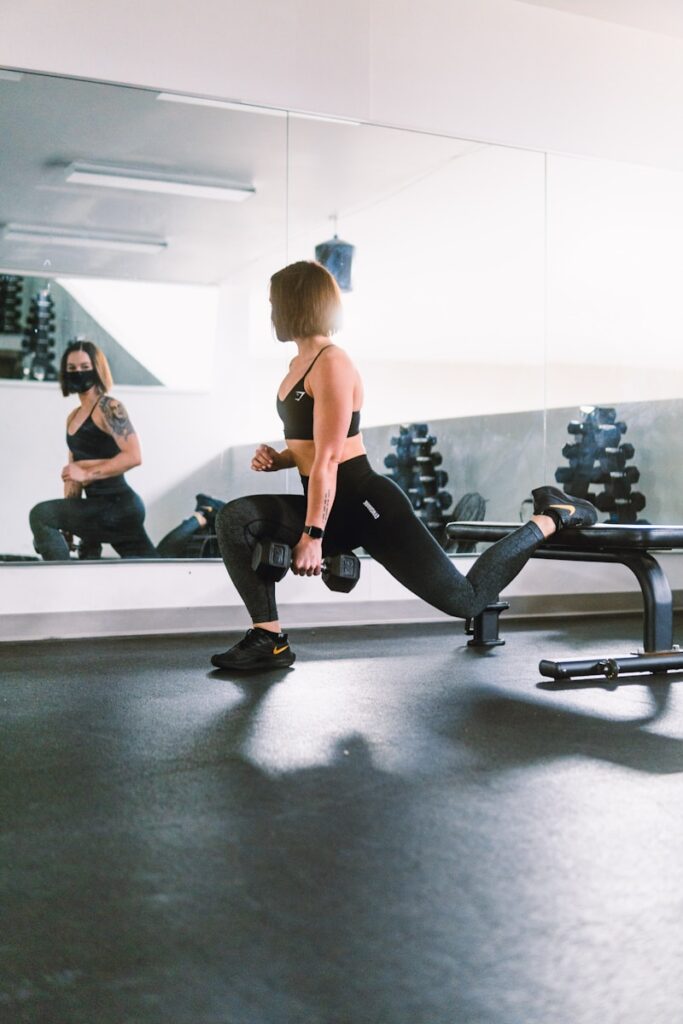
- Lower Body Day: Squats, lunges, deadlifts.
- Full Body Day: Combination of upper, core and lower moves for total engagement.
This is where your Beginner’s Guide to Lifting Form comes in handy, mastering form ensures you’re doing strength training workouts for women gym or home exercise for beginners safely.
3. Volume, Reps & Sets for Your Split
Knowing how to structure your reps & sets ensures each session is effective without being overwhelming. Beginners should aim for:
- Strength focus: 4–6 reps, 3–4 sets
- Tone/size (hypertrophy): 8–12 reps, 2–3 sets
- Endurance: 12–20 reps, 2–3 sets
Pairing your split with the advice from How Many Reps & Sets Do You Really Need as a Beginner? keeps you on track for progress while avoiding burnout.
Even a 10-minute workout with weights or 5-minute weight workout can fit neatly into your split on busier days.
4. Sample Beginner-Friendly Split
Here’s a simple example for a 3-day-per-week plan:
Day 1 – Full Body: Squats, push-ups, rows, planks
Day 2 – Rest or Active Recovery: Light cardio, stretching, simple body weight exercises
Day 3 – Upper/Lower Combo: Deadlifts, bench press, lunges, shoulder presses
Day 4 – Rest
Day 5 – Full Body or Dumbbell Focus: Dumbbell presses, rows, squats, glute bridges
Day 6 – Optional Cardio/Bodyweight Session
Day 7 – Rest
This structure works with your weekly dumbbell workout plan at home, home strength training, or strength workouts for women in the gym.
5. Adding Nutrition and Supplements
While the split handles structure, pairing it with nutrition and supplements can supercharge results:
- Protein-rich meals for muscle repair
- Hydration and electrolyte balance
- Supplements like Creatine for Women to boost strength and recovery
Even easy gym workouts losing weight for women or a home exercise for beginners routine benefit from proper fueling and recovery.
📌 Pin this for later! ⬇
6. Tips for Staying Consistent with Your Split
Beginners often give up because the plan feels intimidating. Here’s how to stick with it:
- Start small: Focus on 2–3 sessions per week before adding more.
- Track progress: Keep a log of exercises, reps, and sets.
- Mix in bodyweight exercises: 20-minute body weight workouts can fill gaps or recovery days.
- Make it fun: Try new simple weight exercises for women or easy free weight exercises to keep sessions interesting.
Consistency beats intensity, regular adherence to your split is what drives results.
7. Adjusting Your Split as You Progress
Beginners don’t stay beginners for long! As strength improves:
- Increase weights in beginner dumbbell workouts
- Add sets or reps for challenge
- Switch from full-body to upper/lower or push/pull/legs
- Incorporate advanced tools like beginner strength training equipment or beginner strength training tools
This ensures you continue seeing gains while avoiding plateau.
8. How to Fit Your Split Into a Busy Schedule
Let’s be honest, life’s hectic. Between work, family, and errands, it’s easy to skip workouts. But a strength training split makes scheduling easier because it gives each day a clear focus.
- Pick 3–4 non-consecutive days for full-body or upper/lower splits.
- Short sessions work too: a 10-minute workout with weights, 5-minute weight workout, or a 20-minute body weight workout still counts.
- Swap in home exercise for beginners on days when you can’t hit the gym.
The trick is consistency, not perfection. Even quick, focused sessions beat “all or nothing” thinking.
9. Common Mistakes Beginners Make With Splits
Even the best plans fail if you make rookie mistakes. Here’s what to watch out for:
- Skipping rest days: Recovery is part of the training, your muscles need it.
- Overcomplicating your split: Stick to the basic structure before adding fancy exercises.
- Ignoring form: Check your technique with your Beginner’s Guide to Lifting Form. Bad form can stall gains and risk injury.
- Going too heavy too soon: Beginners should focus on controlled reps in easy free weight exercises or standing weight exercises before loading up.
- Not tracking progress: A weekly dumbbell workout plan at home or gym log helps you stay accountable and see results.

10. How to Evolve Your Split Over Time
Your beginner split isn’t set in stone, it should evolve as you get stronger.
- Move from full-body workouts to upper/lower or push/pull/legs for more frequency.
- Gradually increase weights, reps, or sets to challenge your muscles.
- Add accessory movements, like simple dumbbell routines or bodyweight strength training, to target weaker areas.
- Integrate supplements like Creatine for Women if you want to boost recovery and strength gains.
This evolution keeps your strength workouts for women fresh, effective, and motivating, preventing plateaus and boredom.
Read These Next
- 7-Day Strength Training Plan for Total Beginners
- How Many Reps & Sets Do You Really Need as a Beginner?
- Beginner’s Guide to Lifting Form: 5 Essential Moves to Master
- Creatine for Women: How It Boosts Strength and Muscle for Beginners
Conclusion
A well-structured strength training split gives beginners clarity, confidence, and measurable progress. Pair it with correct reps & sets, mastered form, and smart nutrition, and you’ve got a roadmap for consistent gains, whether at home or in the gym.
Start simple, stick to it, and watch your strength grow week by week.
Next Steps
“Strength isn’t built in a day, show up, lift smart, and celebrate every rep.”
Read This Next: 7-Day Strength Training Plan for Total Beginners
📌 Pin this for later! ⬇